

Commercial Property Sales, Purchases & Leases
Corporate & Commercial
What We Handle
01
More Than a Legal Formality
Buying, selling or restructuring a business is rarely just a legal transaction. Every decision can affect ownership, future growth, commercial relationships and financial risk. How the deal is structured shapes who carries which obligations, how the business operates once completion has passed, and what continues to sit with you afterwards. Understanding those implications before you commit helps avoid costly surprises and allows the important decisions to be made with confidence rather than under time pressure late in the process.
02
Why Deals Get Difficult Late
Most transactions don't become difficult because the deal itself is complicated. They become difficult because important issues aren't identified until late in the process, when there is less room to negotiate and more pressure to complete. Our role is to identify potential problems early, explain their commercial impact and help resolve them before they delay or undermine the transaction. We focus on clear advice, efficient communication and solutions that support your commercial objectives rather than creating unnecessary obstacles.
03
Starting With Your Objectives
We begin by understanding the commercial objectives behind the transaction before reviewing the proposed structure and documentation. Once we understand what you're trying to achieve, we investigate potential risks, prepare or review the legal documentation and raise the questions that need answering before completion. We coordinate with the accountants, lenders and other professionals involved so the legal work runs alongside the commercial and financial elements, keeping the transaction progressing efficiently and keeping you informed as it develops.
01
Planning for Change Before It Happens
Most businesses begin with shared ambitions and mutual trust. As a business grows, however, circumstances change. Owners may wish to leave, new investors may become involved, or disagreements may arise about how decisions should be made. A shareholder agreement provides a framework for dealing with those situations by recording the rights, responsibilities and expectations of everyone involved. Putting those arrangements in place early, while relations are good and nothing is in dispute, helps reduce uncertainty and provides greater stability as the business develops.
02
Conversations Worth Having Early
Shareholder disputes rarely begin because people intended to disagree. They usually develop because expectations were never properly discussed or recorded. Questions such as who controls key decisions, what happens if someone wants to leave, or how shares should be valued are far easier to address before disagreements develop. We help business owners have those conversations early, explain the practical consequences of each option, and prepare agreements that reflect how the business actually operates rather than relying on generic precedent documents.
03
Building the Framework
We begin by understanding the ownership structure, the way decisions are currently made and the long-term plans for the business. We then prepare or review the shareholder agreement to cover matters such as voting rights, reserved decisions, share transfers, dividend arrangements, director appointments and dispute resolution procedures. Once the document has been agreed, we explain the practical effect of the key provisions and identify any related company documents that should also be updated to ensure everything remains consistent.
01
Getting the Agreement Right
Every successful commercial relationship begins with a clear understanding of what has been agreed. Whether you're supplying goods, providing services or entering into a long-term commercial arrangement, the contract records what each party is committing to, what happens if circumstances change, and how disagreements will be handled. Well-drafted documents reduce uncertainty, give both sides something reliable to refer back to, and support stronger commercial relationships over time rather than leaving important points to memory or assumption.
02
When Contracts Get Tested
Contracts are usually tested when something unexpected happens. Payment delays, changing requirements or disagreements about responsibilities can quickly expose weaknesses in poorly drafted agreements — often at the point when your business can least afford the disruption. We help identify those risks before contracts are signed, explaining where the wording leaves you exposed and what a more balanced position would look like. The result is greater certainty from the outset and fewer arguments about what was actually agreed.
03
From Commercial Aim to Clear Wording
We start by understanding what the agreement needs to achieve commercially before considering the legal drafting. We prepare new contracts or review documents supplied by another party, identifying provisions that may expose your business to unnecessary risk or fail to reflect the commercial agreement reached. Where appropriate, we negotiate amendments, explain the practical implications of the wording and ensure the final agreement accurately records the arrangements both parties have reached, so the document works as intended if it is ever relied upon.
01
Beyond the Purchase Price
Buying or selling a business is often one of the most significant decisions a business owner will make. Beyond agreeing a purchase price, you'll also need to understand the legal responsibilities, contractual obligations and commercial risks that form part of the transaction. Employees, premises, supplier arrangements and existing liabilities may all transfer or remain behind, depending on how the deal is structured. Knowing what you are taking on, or leaving behind, allows the terms to be negotiated with confidence.
02
Confidence on Both Sides
A successful transaction is about much more than agreeing a purchase price. Buyers need confidence that they understand the business they are acquiring, while sellers need to ensure they are not accepting unnecessary obligations after completion. We help clients identify the issues that genuinely matter, separate them from the points that can be managed within the wider negotiations, and coordinate the legal process with accountants and financial advisers. Clear communication and proactive management keep the transaction moving rather than drifting.
03
Buyers, Sellers and the Steps Between
For buyers, we carry out legal due diligence, review contracts, investigate potential liabilities and prepare or negotiate the acquisition documents. For sellers, we prepare the legal documentation, respond to enquiries, negotiate warranties and disclosures and guide the transaction through to completion. Throughout the matter, we provide clear reports, explain significant legal issues in terms that support commercial decisions, and work alongside the other professional advisers involved so the legal, financial and tax aspects progress together efficiently.
01
Has Your Structure Kept Up?
The legal structure that supported your business when it first started may no longer be the right one as it grows. Bringing in investors, restructuring ownership or preparing for succession all create opportunities to review whether the business remains legally structured for its future objectives. Constitutional documents, share classes and decision-making arrangements that suited two founders may not suit a larger team, an external investor or a planned sale, and reviewing them early keeps your options open.
02
What Growth Exposes
Growth often exposes legal arrangements that have simply evolved over time rather than being actively reviewed. Outdated constitutional documents, unclear ownership arrangements or informal decision-making can all create unnecessary obstacles as a business develops — typically at the worst possible moment, when an investor, buyer or lender begins asking questions. We help identify those issues before they affect future investment, expansion or succession planning, so the structure supports your plans instead of holding them up.
03
Reviewing and Reshaping
We begin by reviewing your current business structure, constitutional documents and ownership arrangements to understand how the business actually operates. We then advise on the available options, explain the practical consequences of each, and prepare any necessary legal documentation. We coordinate with your accountants or other professional advisers where the change carries tax or financial implications. Once the new arrangements have been agreed, we complete the required company documentation and explain how the updated structure will operate in practice.

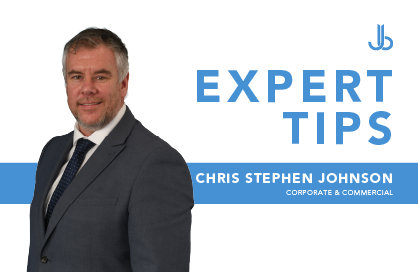
"Every business decision carries opportunity and risk. Whether you're starting, growing, buying or selling a business, we help you understand the legal implications so you can move forward with confidence."~ Christopher Stephen Johnson
Christopher Stephen Johnson
Head of Corporate & Commercial

Adam Chiocchi
Solicitor

Mark Johnson
Commercial Paralegal

Janice Johnson
Practice Manager

Heather Boon
Legal Assistant

Roisin Ryder
Legal Assistant
Frequently Asked
Questions
How quickly can commercial documents be reviewed?
Timescales depend on the nature of the work and the documentation involved. Once we understand what is required, we will explain the likely timescale and agree the next steps with you
Can you provide ongoing legal support as our business grows?
Many businesses require legal advice as they expand, enter new commercial relationships or undertake significant transactions. We can provide support across a range of commercial matters as your requirements develop
I’m not sure which commercial service I need
You do not need to identify the legal solution before contacting us. Explain what you are trying to achieve and we can help you understand the options available and the most appropriate next step.
Do you advise new businesses?
Yes. We advise new and established businesses on company formation, shareholder arrangements, commercial contracts and wider legal issues. The support required will depend on the nature and stage of the business.
Can you work alongside our accountant or financial adviser?
Yes. We regularly work with accountants, lenders and other professional advisers where their involvement supports the transaction or wider business objectives.
How much will it cost?
We will explain the likely cost once we understand what is involved. Where a fixed fee is available, we will confirm what is included before work begins.
Corporate & Commercial
Capital Finance: Choosing the Right Funding Structure for Your Business
Read article
Commercial Property Sales, Purchases & Leases
Understanding Dilapidations – How to Protect Yourself at the End of a Commercial Lease
Read article 
Contact Johnson & Boon
Call us
0151 6372 034